When Rumor Replaces Process, Community Safety Declines
False allegations reduce safety by fracturing communities and obscuring real harm.
There's distance now between me and certain groups within the Houston Burner community, reflecting broader patterns that have fractured the community over time. Not because things faded quietly, but because a false narrative about me was made public and circulated. I want to name that clearly, without theatrics or subtext.
This isn't a grudge, call-out, or attempt to win people over. It's a boundary, stated plainly, for my own closure. It's the decision to take my energy, my time, and my integrity elsewhere.
Distance is the only healthy response when people believe lies without evidence and dismiss truth when it's shown.
When Communities Accept Rumor for Truth, Real Harm Follows
For the past two years, rumors were intentionally spread and repeated to discredit and demonize me. The instigators framed various allegations not as questions or concerns raised in good faith, but as conclusions. A shifting narrative took shape that framed gossip as safety and accusation as accountability — without concrete details or evidence, without process, and without ever hearing from me. Watching how easily that story was accepted was deeply disappointing. I learned that fear travels faster than facts, and silence often gets mistaken for guilt.
Repetition is one of the most reliable ways falsehoods gain credibility, because familiarity is often mistaken for truth.
I'm not perfect, and I have never claimed to be. I'm not interested in playing the role of a victim or asking for sympathy. What I am doing is sharing facts and letting people decide for themselves, even knowing many already have.
The individuals who smeared me did so after I stopped tolerating manipulative behavior, exposed their deception to those affected, and cut ties. Rumors began after I announced that certain people were not welcome at my home, to protect my peace.
They are not uncomfortable because I harmed them. They are angry because I recognized manipulation. When I set boundaries, insisted on accountability, and refused to engage in games, their leverage disappeared. When those tactics failed, rumors were used to isolate and exclude me socially.
When people are seeking clarity and safety, the story stabilizes. When they're seeking control, it keeps changing.
The story was inconsistent: details shifted, claims expanded, and contradictions accumulated as the narrative evolved. The pattern that emerged was not one of concern or safety, but of retaliation; discrediting, exclusion, and harassment following my refusal to tolerate disrespect.
I've shared an audio recording that documents some of the abuse I endured, including an attempt to frame me for assault and threats ruin my reputation — not to inflame anything, but to offer something tangible where there has only been rumor.
Abused and Threatened in My Own Home
To those who quietly supported me: thank you. I see you. I understand why many of you chose not to publicly defend me or challenge the narrative, and I don't hold that against you. In communities like this, speaking up can carry a real social cost. Your compassion, objectivity, and willingness to look at the facts mattered more than you may realize.
Actions speak louder than words. In spaces where people engaged with me directly and observed behavior firsthand, the narrative didn't hold. The harmful behavior behind the rumors revealed itself and was addressed without my involvement. I'll continue participating in spaces that welcome good-faith engagement and mutual respect.
Choosing peace sometimes means accepting that you'll be the villain in someone else's story.
What I can't do is continue to associate with people that allowed my character to be rewritten so easily. Contradictory accusations outweighed evidence, and psychological harm was obscured by therapeutic language. Some people lashed out at me believing they were protecting victims. That behavior did not arise in a vacuum. Covert abusers rely on narrative manipulation to recruit others for the dirty work, without participants realizing the role they are playing. Environments that reward this dynamic erode the very foundation of community.
So this is where I land: I wish the community well and hope it changes course to live up to the values it speaks about. I urge members to reflect on how narratives are formed and how bullying and exclusion become normalized under the guise of safety. Judging people without due process or evidence fractures communities and undermines collaboration.
A community that acts on hearsay over evidence and process doesn't become safer. It becomes smaller.
I've stepped away because peace requires distance from places that proved willing to erase someone's humanity for the sake of comfort or consensus. In situations like this, rumor and ostracism are often used to pressure someone into leaving — not to resolve harm, but to cause it.
Choosing distance here is about refusing that coercive dynamic rather than participating in it. Finding genuine, healthy connection elsewhere made the dishonesty of the narrative unmistakably clear. I'm moving forward lighter, clearer, and grounded in the truth.
My conscience is clear. No matter how they tell the story, mine doesn't change.
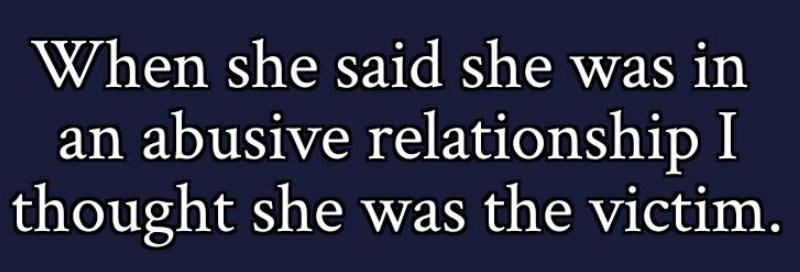
A lesson in discernment: I believed victimization narratives, later realizing they foreshadowed behavior I experienced firsthand
Lessons Learned the Hard Way
People interested in silencing the truth often work hardest to discredit those who might speak it.
The last two years fundamentally changed how I understand trust, community, and discernment. I learned how easily narratives can take hold when people rely on secondhand stories rather than direct experience or evidence.
I also learned that moments of uncertainty reveal who values process, who values popularity, and who is willing to seek the truth. Not everyone did. That clarity, while painful, was ultimately instructive. I've learned that people who substitute silence, popularity, or convenience for fairness do not belong in my life.
I'm grateful to those who approached the situation with care, curiosity, and restraint, even when doing so came at a social cost. Their quiet integrity mattered more than they may realize.
The most important lesson for me is this: clarity doesn't require consensus, and integrity doesn't require being believed by everyone. Over time, patterns speak for themselves and I've learned to trust that, while choosing healthier people and spaces for myself.